FIBC Liner Types: LDPE, EVOH and Aluminium Barrier Guide
Detailed comparison of big bag liner types. LDPE, HDPE, EVOH, PA and aluminium liner properties, barrier performance and industry applications.
What is an FIBC Liner?
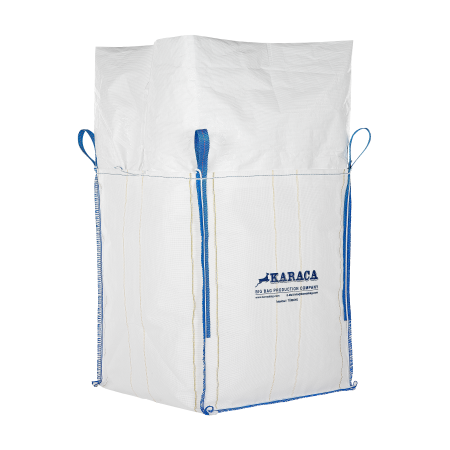
An FIBC liner is a plastic film sleeve inserted into or sewn to the inner surface of a big bag.
Main Functions
- Moisture barrier — Protects hygroscopic products from moisture absorption
- Oxygen barrier — Prevents oxidation and spoilage
- Contamination prevention — Provides isolation from the external environment
- Product containment — Prevents dust escape, ensures clean discharge
Liner Material Types
1. LDPE (Low-Density Polyethylene)
The most commonly used liner material.
| Property | Value |
|---|---|
| Density | 0.910 - 0.940 g/cm³ |
| Flexibility | High |
| Transparency | High |
| Moisture Barrier | Medium |
| Oxygen Barrier | Low |
| Sealability | Easy |
Advantages:
- Economical
- Flexible and easy to apply
- Food contact approval available
Disadvantages:
- Limited oxygen barrier
- Low UV resistance
Suitable Products: Flour, sugar, grain, plastic granules, general purpose
2. HDPE (High-Density Polyethylene)
A more rigid liner material with chemical resistance.
| Property | Value |
|---|---|
| Density | 0.941 - 0.965 g/cm³ |
| Flexibility | Medium |
| Moisture Barrier | Good |
| Chemical Resistance | High |
| Puncture Resistance | High |
Advantages:
- Better moisture barrier than LDPE
- High resistance to chemicals
- Mechanical durability
Disadvantages:
- Less flexible
- Sealing challenges
Suitable Products: Chemical powders, fertilizers, industrial minerals
3. EVOH (Ethylene Vinyl Alcohol)
High-performance material providing superior oxygen and aroma barrier.
| Property | Value |
|---|---|
| Oxygen Barrier | Very High |
| Aroma Barrier | Very High |
| Moisture Barrier | Low (standalone) |
| Structure | Usually multi-layer |
Multi-Layer Structures:
- PE/EVOH/PE (standard barrier)
- PA/EVOH/PE (high strength + barrier)
- PA/EVOH/PA (maximum performance)
Advantages:
- Excellent oxygen barrier
- Aroma protection
- Food safety
Disadvantages:
- Moisture sensitivity (single layer)
- High cost
- Requires multi-layer structure
Suitable Products: Coffee, spices, food additives, aroma-sensitive products
4. PA (Polyamide / Nylon)
Offers a combination of mechanical durability and barrier properties.
| Property | Value |
|---|---|
| Mechanical Strength | Very High |
| Puncture Resistance | Very High |
| Oxygen Barrier | High |
| Moisture Barrier | Medium |
| Temperature Resistance | High |
Advantages:
- Superior mechanical properties
- Good oxygen barrier
- High temperature tolerance
Disadvantages:
- Moisture absorption
- High cost
Suitable Products: Sharp-edged products, high temperature, pharmaceutical raw materials
5. Aluminium Foil Laminate
Used for maximum barrier performance.
| Property | Value |
|---|---|
| Oxygen Barrier | Absolute (0) |
| Moisture Barrier | Absolute (0) |
| Light Barrier | Absolute (0) |
| UV Barrier | Absolute (0) |
| Structure | PE/ALU/PE or similar |
Advantages:
- Complete barrier (moisture, oxygen, light)
- Longest shelf life
- Metallic protection
Disadvantages:
- Highest cost
- Risk of cracking
- Recycling challenges
Suitable Products: Milk powder, enzymes, vitamins, sensitive pharmaceutical raw materials
Barrier Performance Comparison
Oxygen Transmission Rate (OTR - cm³/m²·day)
| Material | OTR Value |
|---|---|
| LDPE (50μ) | 4000-6000 |
| HDPE (50μ) | 1500-2500 |
| PA (25μ) | 30-50 |
| EVOH (15μ) | 0.5-1.5 |
| Aluminium | 0 |
Water Vapor Transmission Rate (WVTR - g/m²·day)
| Material | WVTR Value |
|---|---|
| LDPE (50μ) | 8-15 |
| HDPE (50μ) | 4-8 |
| PA (25μ) | 80-150 |
| EVOH (15μ) | 20-40 |
| Aluminium | 0 |
Liner Thickness Selection
| Application | Recommended Thickness |
|---|---|
| Standard products | 80-100 μ |
| Heavy loads (>1500 kg) | 120-150 μ |
| Long-term storage | 150-200 μ |
| Moisture-sensitive products | 150+ μ with barrier |
| Maximum protection | 200+ μ multi-layer |
Liner Configuration Options
By Attachment Method
- Loose Liner: Simply inserted into the bag, not attached
- Tabbed Liner: Attached to bag body with welded tabs
- Glued Liner: Adhesive bonded to inner surface
- Sewn Liner: Stitched to bag construction
By Closure Type
- Open Top: Manual tying or heat sealing after filling
- Spout Top: Integrated filling spout
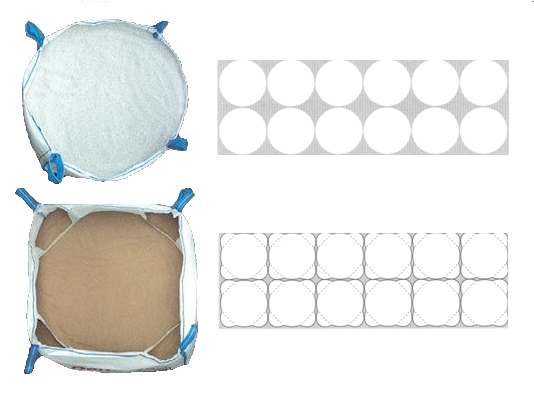
- Form Fit: Shape-matched to bag dimensions
Industry-Specific Recommendations
Food Industry
→ LDPE for general products → EVOH multi-layer for aroma-sensitive foods → Aluminium laminate for dairy powders → EU 1935/2004 and FDA compliance required
Pharmaceutical Industry
→ PA/EVOH/PE for API protection → Aluminium laminate for maximum stability → Clean room production essential
Chemical Industry
→ HDPE for chemical resistance → Anti-static liners for powder handling → Consider Type C bag compatibility
Agriculture Industry
→ LDPE for seeds and fertilizers → UV-stabilized for outdoor storage → Ventilation requirements if applicable
Karaca Liner Capabilities
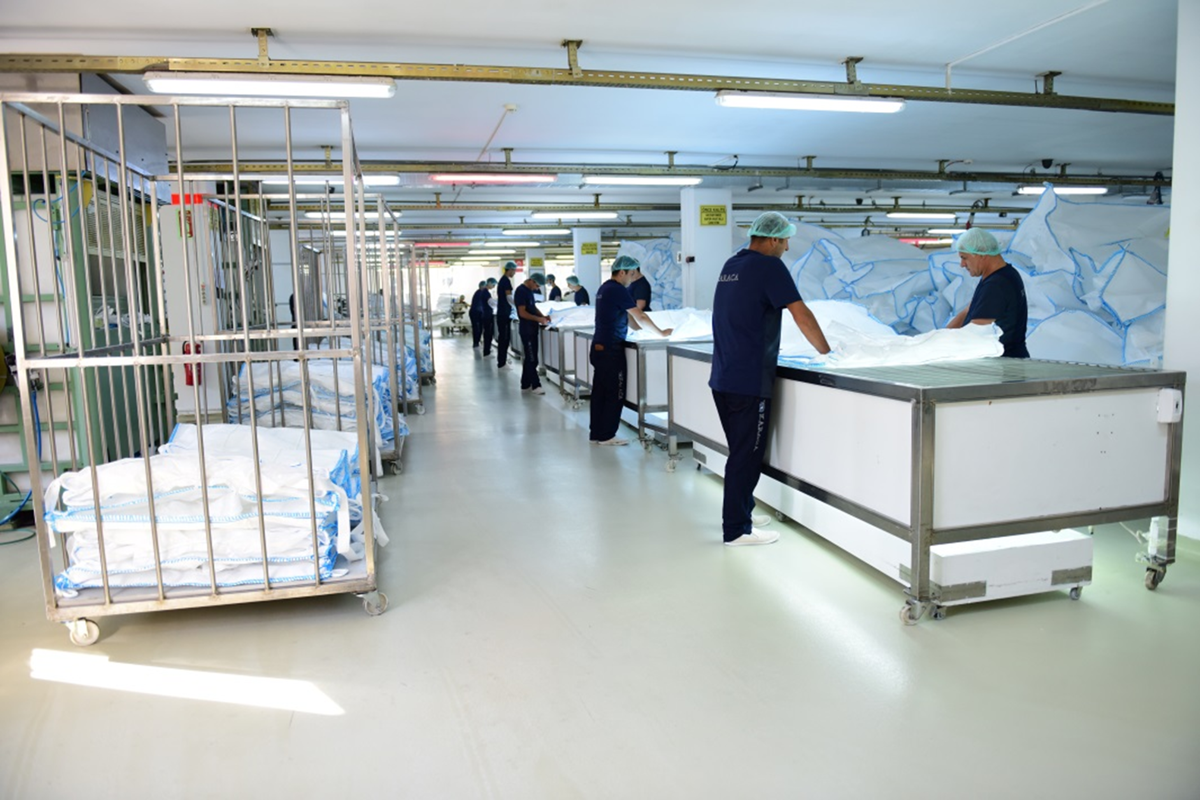
At Karaca, we offer comprehensive liner solutions manufactured in our BRC IoP AA certified facility:
- All material types: LDPE, HDPE, EVOH, PA, Aluminium
- Custom thicknesses: 60-250 microns
- Multi-layer laminates: Tailored barrier properties
- Food-grade certification: EU 1935/2004 compliant
Our technical team can recommend the optimal liner configuration based on your product characteristics, storage conditions, and regulatory requirements.
Request a technical consultation to determine the best liner solution for your application.
Frequently Asked Questions
FAQ on This Topic
What is an FIBC liner and why is it necessary?
What is the difference between LDPE and HDPE liners?
When should an EVOH liner be preferred?
What is aluminium liner used for?
How is liner thickness determined?
Related Industry Solution
Explore SolutionsRelated Articles
What is FIBC? Comprehensive Big Bag Guide
Comprehensive guide to FIBC (Flexible Intermediate Bulk Container) also known as big bags. Types, applications, safe working load capacities and selection criteria.
Big Bag Types: Standard, Q-Bag, Conductive & UN Certified FIBC Comparison
Detailed comparison of standard big bags, Q-Bags, conductive Type C, and UN certified FIBC types. Which big bag type suits your needs?
BRC IoP Certification: Why It Matters for Food Packaging
What is BRC Packaging certification, why is it important, and how does it affect food industry supply processes? Detailed explanation of AA, A, B, C grading and audit process.
Phone
+90 216 479 94 78E-posta
info@karacabigbag.comAddress
Cengeldere 107, 34830
Istanbul, Türkiye